Maldives & Atolls · Travel Medicine
Every Maldives resort begins with a transfer, by seaplane or by speedboat.
Get the scopolamine patch for the transfers, the antiemetic for a rough crossing, and the antibiotic CDC recommends for traveler's diarrhea in South Asia, prescribed without the appointment and sent to your pharmacy before you fly to Malé.
- Physician-founded
- Licensed in all 50 states
- HSA / FSA eligible
- Same-day Rx in most cases
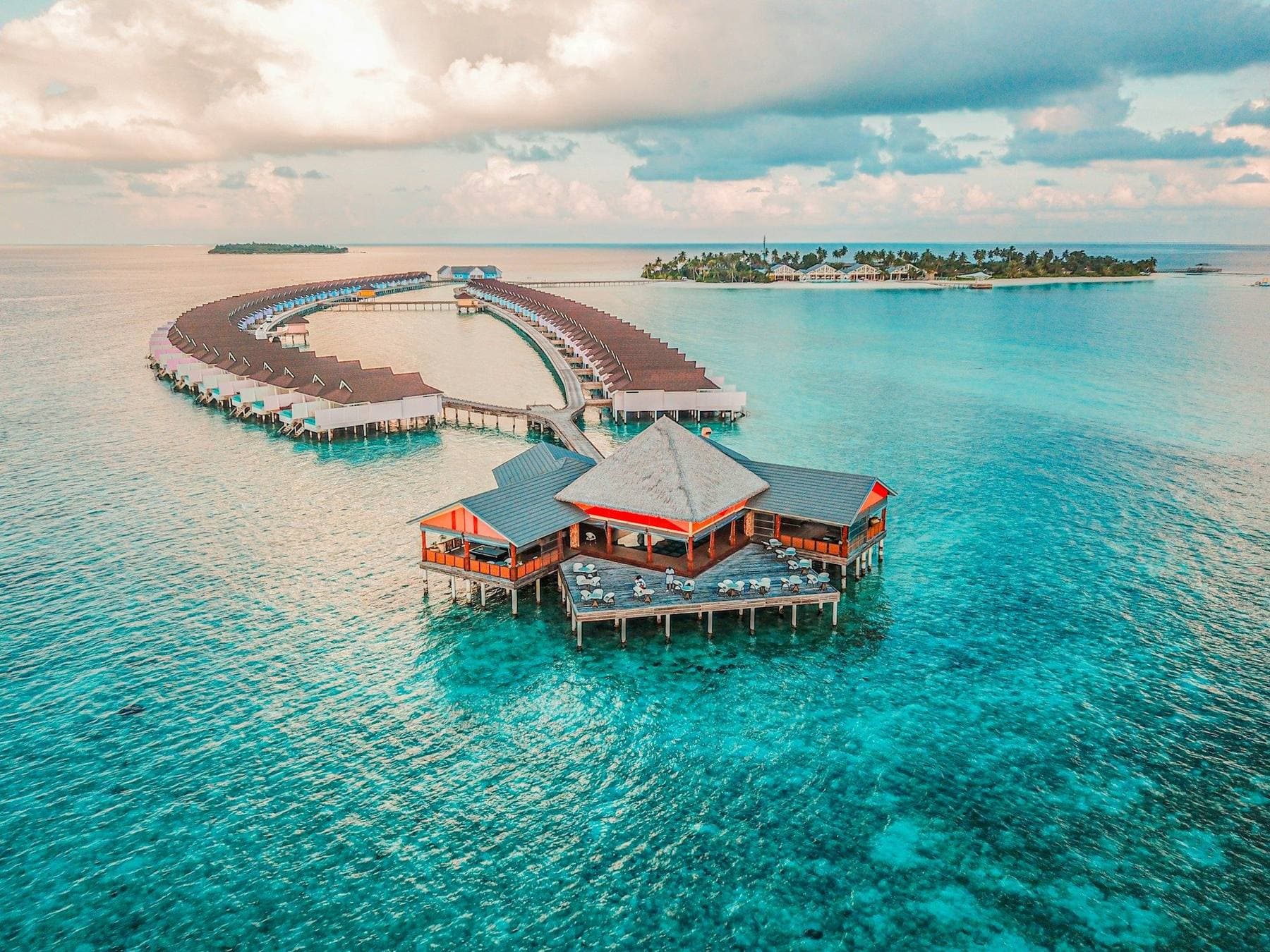
The overwater villa is the photo. The way you reach it is a transfer. From Malé, the outer atolls are a 30 to 45 minute seaplane hop on a small unpressurized Twin Otter, and the nearer islands are a speedboat ride across open water. Once you are there, the diving, the sandbank picnics, and the snorkel drop-offs all run on small dhoni boats. CDC notes that small vessels in rough or open water, and light aircraft, are among the strongest motion sickness triggers. The good news on the rest: the Maldives has been malaria-free since 1984, so there is no pill to take for that. Scopolamine handles the transfers. Azithromycin handles the meal. Ondansetron handles whatever is left.
Maldives travel health guide — vaccines, snapshot overview, and what to review before you go.
Orders are reviewed and prescriptions sent to your pharmacy within 24 hours.
Booking questions, platform help, or just not sure where to start, give us a call.
+1 (302) 251-2302Rx at your pharmacy in three steps.
No appointment. No waiting room. Answer a few questions and a licensed provider reviews within hours.
Your destination, dates, health history, and current medications. Takes about 2 minutes.
A licensed clinician reviews your health profile, checks for interactions, and approves your prescription.
- Allergy screen passed
- Drug interactions clear
- Prescription approved
Your approved prescription is sent electronically to the pharmacy of your choice. Pick it up when your pharmacy has it ready.
Skip the appointment. Get the same Rx.
Both columns cover the visit and prescribing only. Your pharmacy bills the medication itself on either side.
Medications in the Maldives & Atolls plan
Maldives medication FAQ
- The Maldives is not a one-flight beach trip. After you land at Malé, you still have to get to your island, and that is a seaplane to the outer atolls or a speedboat to the nearer ones, across open Indian Ocean water. The seaplane is a small unpressurized Twin Otter on floats, the speedboat ride can be choppy, and once you are settled the diving, sandbank trips, and snorkel drop-offs all run on small dhoni boats. CDC notes that small vessels in rough or open water and light aircraft are among the strongest motion sickness triggers, and that a large share of susceptible travelers are affected. Scopolamine goes behind the ear before you board, lasts up to 72 hours per patch, and covers the transfer days without a second thought.
- No. The Maldives has been free of locally transmitted malaria since 1984 and was formally certified malaria-free by the World Health Organization in 2015, the first country in the WHO South-East Asia Region to earn that certification. There is no malaria chemoprophylaxis to take for a Maldives trip. The mosquito-borne risk that does remain is dengue, which has no preventive pill, so insect-bite prevention with a DEET or picaridin repellent is the baseline. This kit does not treat or prevent dengue, but the ondansetron in it handles the nausea side of a dengue-related or any other stomach upset.
- Because not every Maldives trip is a single high-end resort, and food handling varies. The Maldives sits in South Asia, which CDC places in the high-risk band for traveler's diarrhea, where the attack rate runs 30 to 70 percent over a two-week trip. Exposure is highest on local-island guesthouse stays in places like Maafushi, Thulusdhoo, and Gulhi, and on lower-tier resort buffets. For South Asia, CDC recommends azithromycin as the first-line empiric treatment because the bacteria that cause most traveler's diarrhea in the region are widely resistant to the older fluoroquinolone antibiotics. The Wandr standard is azithromycin 500 mg once daily for 3 days.
- Three prescriptions in one visit. Scopolamine patches (Transderm Scop) to prevent motion sickness on the seaplane and speedboat transfers and the dhoni excursions, with up to 72 hours of coverage per patch. Ondansetron (Zofran) to stop nausea and vomiting from any cause. Azithromycin 500 mg, taken once daily for 3 days, as the antibiotic CDC recommends for bacterial traveler's diarrhea in South Asia. Three risks, three prescriptions, one visit.
- Orders are reviewed by a US-licensed provider and the Rx is sent electronically to your pharmacy within 24 hours. Most travelers can pick it up the same day.
- If a provider can't safely prescribe (rare, usually due to a glaucoma history with scopolamine or a macrolide allergy with azithromycin), the visit fee is refunded in full. You only pay if the Rx is sent.
The villa is the easy part. Start with the transfer.
Three risks, three prescriptions, one visit. Reviewed by a US-licensed provider and ready at your pharmacy before you fly to Malé.